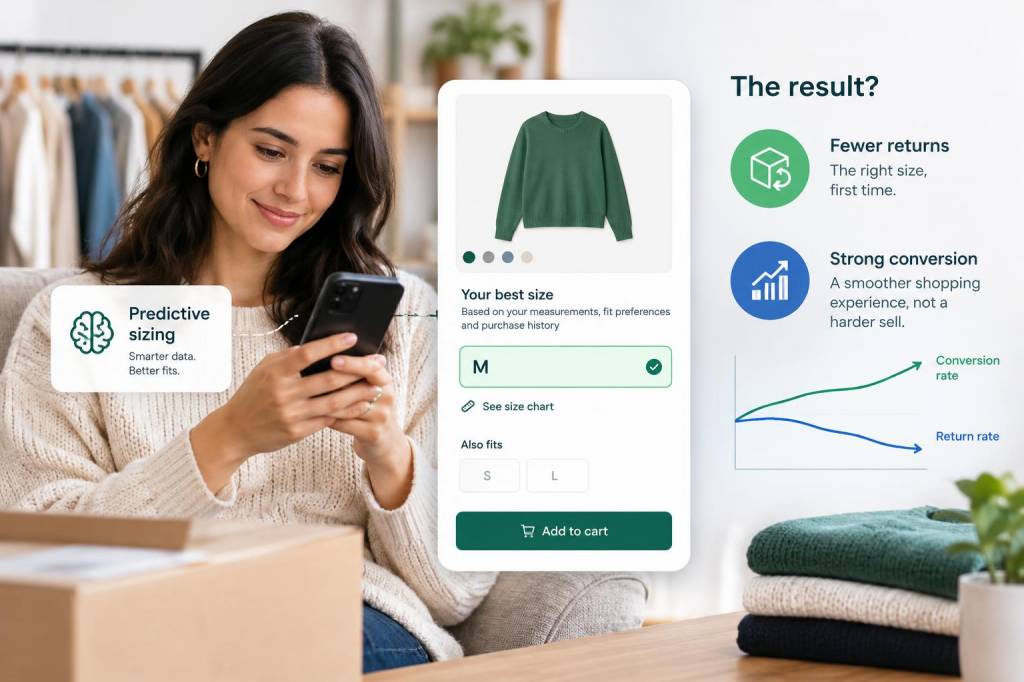
I have spent enough time around retail teams to know that returns are not just a customer service problem. They are a margin problem, a logistics problem, and, in fashion and footwear especially, a conversion problem hiding in plain sight. When I look at return-heavy categories, I rarely see a lack of demand. I usually see a mismatch between what shoppers expect and what arrives at their door. That is why I believe predictive sizing tools have become one of the most practical ways for retail brands to reduce returns without weakening conversion.
Why size uncertainty still drives so many abandoned baskets
When a shopper hesitates at checkout, size uncertainty is often part of the hesitation. Even if a product looks great, even if a brand has strong imagery and solid reviews, the question remains: Will it fit me? That doubt creates friction. Some shoppers buy two sizes “just in case,” which inflates return rates. Others abandon the basket entirely because they do not want the hassle of sending items back.
I have seen brands assume that reducing size guidance will protect conversion by keeping the buying journey simple. In reality, it often does the opposite. If a shopper cannot quickly understand how a garment or shoe will fit, they either delay the purchase or make a guess. A guess is not loyalty. A guess is a future return.
Predictive sizing tools solve this by turning fit uncertainty into a data-backed recommendation. Instead of asking customers to interpret a static size chart, these tools estimate the most likely size based on body measurements, previous purchases, fit preferences, product attributes, and in some cases returns history from similar shoppers.
What predictive sizing actually does in practice
I think it helps to separate predictive sizing from traditional sizing charts because they are not solving the same problem. A size chart tells a shopper what a size means in abstract measurements. A predictive sizing tool tells a shopper what size is most likely to work for them.
That shift matters. A customer may know they are usually a medium, but that does not help if one brand runs narrow in the shoulders and another runs loose at the waist. Predictive sizing tools account for those differences by combining product data with shopper data. Depending on the platform, they may use:
- Body measurements entered by the shopper
- Past purchase and return behavior
- Brand-specific fit feedback from other shoppers
- Garment construction details, such as stretch, rise, or cut
- Shoe lasts, width profiles, and material flexibility
- Style preferences, such as relaxed fit or close fit
When those signals come together well, the result feels less like a guess and more like a personalized fit recommendation. That is powerful because it removes a major source of hesitation while also reducing the likelihood that a shopper orders the wrong size.
Why predictive sizing can support conversion instead of hurting it
Many retail teams worry that adding another step to the product page will slow shoppers down. I understand that concern, but in most cases a good predictive sizing experience does not create friction; it removes friction. Shoppers are already asking themselves whether a size will work. A smart recommendation answers that question quickly.
In my view, the key is making the tool feel helpful, not intrusive. If it asks too many questions, looks clunky, or feels like a quiz before the shopper can even see a recommendation, it can create drop-off. But if it is lightweight, clear, and optional, it can actually improve conversion because it gives shoppers confidence at exactly the moment they need it.
I also think brands sometimes underestimate the psychological effect of certainty. A shopper who sees “Recommended size: 10” with a clear explanation feels reassured. That reassurance can nudge them from browsing to buying. And because they are more likely to receive a size that fits, they are also more likely to keep the item.
Where predictive sizing creates value across the customer journey
I do not see predictive sizing as a single conversion lever. I see it as a customer journey asset. It influences multiple stages at once.
| Journey stage | Value created | Business impact |
|---|---|---|
| Product discovery | Clearer fit confidence | Higher click-through and product page engagement |
| Product page | Personalized size recommendation | Lower hesitation, stronger add-to-basket rate |
| Checkout | Reduced anxiety about fit | Lower basket abandonment |
| Post-purchase | Better size match | Fewer returns and exchanges |
| Future purchases | More accurate shopper profile | Stronger repeat purchase confidence |
What I like most about this approach is that it does not only protect margin. It also improves trust. When a shopper repeatedly gets the right fit, they begin to rely on the brand’s sizing more confidently. That trust can be more valuable than a short-term conversion spike.
Common mistakes brands make when rolling out sizing tools
I have seen several brands launch predictive sizing features with good intentions and poor execution. The technology can be excellent, but the rollout fails because the user experience is not aligned with shopper behavior.
One mistake is asking for too much information up front. If the tool behaves like a medical intake form, many shoppers will leave. Another mistake is hiding the recommendation too deep on the page. If the fit guidance is difficult to find, it does not reduce uncertainty at the right moment.
A third mistake is treating sizing as a one-size-fits-all problem across the catalog. A blazer, a sneaker, and a relaxed knit do not need the same fit logic. Predictive sizing works best when it is tuned to product type and category behavior. I also think brands underestimate the need for continuous learning. Size recommendations should improve over time as more purchases, returns, and shopper feedback come in.
Finally, I have noticed that some brands focus only on the technology and forget the language. A recommendation should be easy to understand. Shoppers should know why a size was suggested, what kind of fit it implies, and what to do if they prefer a looser or tighter feel.
What I would measure if I were running the rollout
If I were leading a predictive sizing project, I would not judge success by one metric alone. I would look at a mix of commercial and behavioral indicators because a lower return rate is useful only if conversion stays healthy or improves.
- Add-to-basket rate on products with sizing recommendations
- Conversion rate before and after rollout
- Return rate by size-related reason codes
- Exchange rate instead of refunds
- Average order value if confidence encourages multi-item purchases
- Customer satisfaction after delivery
- Repeat purchase rate for shoppers who used the tool
I would also segment the data carefully. A tool may perform well for one category and poorly for another. It may help first-time buyers more than returning buyers. It may work better on mobile than desktop, or better for certain size ranges than others. Those differences matter because they tell me whether the recommendation logic is truly helping, or merely appearing helpful.
How I would balance fit accuracy with brand experience
Retail brands often worry that predictive sizing will feel technical or cold. I understand that concern, especially in fashion, where emotional appeal is so important. But I do not think data and brand expression are in conflict. In fact, they can reinforce each other.
I would keep the interface simple, use warm and reassuring copy, and make sure the recommendation feels like part of the shopping experience rather than a bolt-on feature. If a brand has a playful voice, the sizing tool can reflect that. If a brand is premium and minimal, the fit guidance can stay understated and elegant.
I also think transparency is essential. Shoppers do not need a detailed model explanation, but they do need enough context to trust the result. A short note such as “Based on your previous purchases and this item’s fit profile” can make a recommendation feel credible without overwhelming the page.
Why I see this as a long-term retention play
The most interesting thing about predictive sizing is that it does more than reduce returns. It helps shape future expectations. Once a shopper has a reliable fit profile, every future purchase becomes easier. That lowers hesitation, speeds up decision-making, and creates a more satisfying experience overall.
I have come to believe that this is where a lot of retail brands can win. Not by shouting louder, but by being more useful at the exact moment of doubt. When a shopper feels understood, they are more likely to buy, more likely to keep what they bought, and more likely to come back.
For brands that sell at scale, even a modest improvement in fit accuracy can create meaningful financial impact. Fewer returns mean lower reverse logistics costs, less pressure on customer service, better inventory health, and a cleaner picture of demand. But from a marketing perspective, the bigger win is confidence. A confident shopper is far easier to convert than a hesitant one.
That is why I see predictive sizing not as a nice extra, but as a serious marketing and commerce capability. When used well, it helps me do something that every retail brand wants to do: sell with less friction, deliver with more accuracy, and build a customer relationship that feels smarter with every purchase.