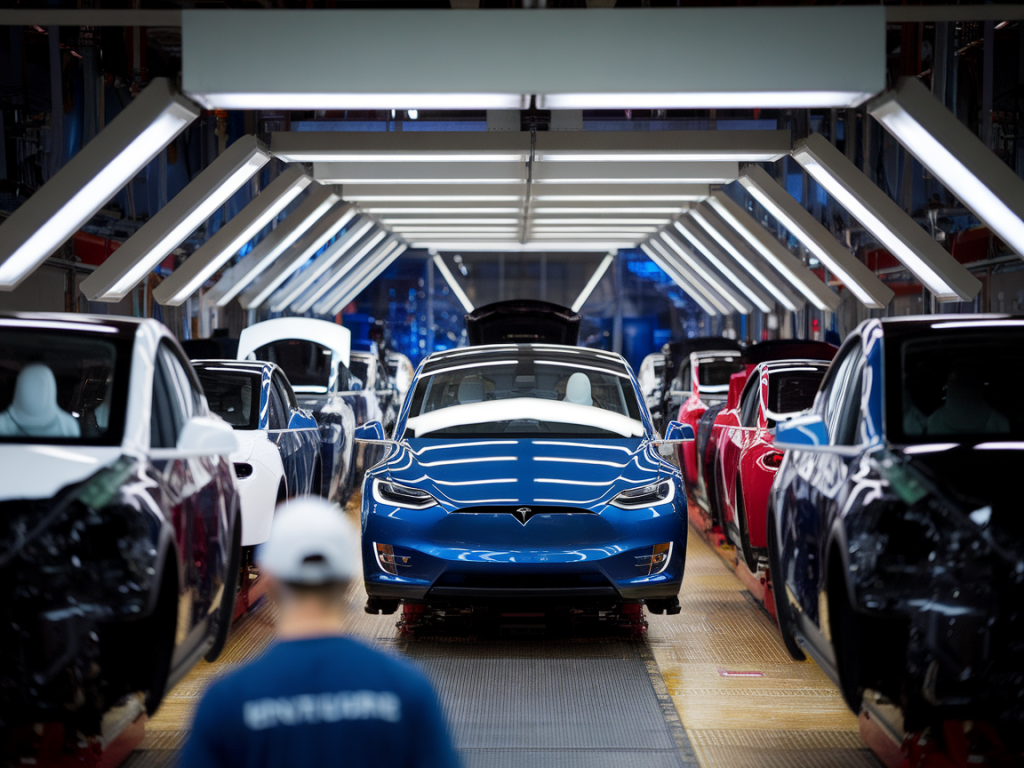
I’ve been watching Tesla’s manufacturing moves closely throughout 2024, because they matter not just for big automakers but for every entrepreneur trying to build an EV business. Tesla made several operational changes last year that materially reduced battery pack costs — and many of those changes can be adapted by small EV startups. Below I break down what Tesla did, why it mattered, and which tactics a smaller company can realistically copy without billion-dollar investments.
What Tesla changed in 2024 to cut battery pack costs
Across factories and supply chains, Tesla pursued a mix of design simplification, manufacturing automation, vertical integration, and smarter sourcing. The major levers I tracked were:
Tesla continued pushing cell-to-pack (CTP) layouts in 2024, reducing or eliminating modules and integrating cells directly into the pack structure. This eliminated module hardware, decreased parts count, improved volumetric energy density, and cut labor and assembly time — all translating into lower cost per kWh.
After years of development, Tesla ramped 4680-like formats more reliably. Higher-format cells increased energy per unit and simplified pack assembly (fewer cell-to-cell connections, fewer interconnects). Importantly, Tesla focused on yield improvements and automation to bring down manufacturing scrap and rework costs.
Tesla focused on thermal designs that required fewer parts and simpler coolant channels. By integrating the battery pack as a structural element (using fewer internal frames and fasteners), they lowered both material and assembly costs — the pack became part of the vehicle’s chassis in some models.
2024 saw Tesla continuing to internalize key steps: electrode production, cell assembly (at scale where possible), and even some raw-material processing and recycling. Bringing critical processes in-house improved control over cost drivers and supply chain volatility.
Tesla widened LFP (lithium iron phosphate) use for standard-range vehicles while reserving higher-energy chemistries for long-range models. LFP offers significantly lower cost and longer cycle life, which helped cut pack costs for mass-market variants.
Tesla negotiated larger long-term supply agreements and integrated closer with miners and suppliers. Longer contracts, hedging strategies, and recycling commitments lowered raw-material price exposure.
Improved BMS algorithms enabled more aggressive charge/discharge windows and faster factory validation without sacrificing longevity. Better software meant Tesla could safely push hardware limits and extract more usable energy from each pack.
Why these moves mattered
Reducing cost per kWh requires attacking multiple parts of the value chain: raw materials, cell manufacturing, pack architecture, and assembly labor. Tesla’s combined approach produced compounding benefits. For example, moving to CTP reduced parts and assembly time, which worked hand-in-hand with larger-format cells (fewer physical connections), and both benefited from improved thermal design — fewer failures, better yields, lower warranty costs.
Which of Tesla’s changes can small EV startups copy?
Not everything Tesla does is feasible for a small startup — you don’t have scale or capital to build gigafactories. But many operational principles and targeted tactics are accessible and high-impact if executed cleverly:
You don’t need a full-scale CTP line; you can design your pack architecture to minimize parts, standardize cell subassemblies, and reduce manual joining steps. Modular CTP-inspired approaches (semi-integrated modules that remove redundant components) are realistic and reduce assembly time and errors.
Most startups should favor LFP for cost-sensitive city cars, scooters, or delivery fleets. LFP’s lower cost and improved safety simplify pack engineering and reduce the need for expensive cooling and complex BMS features.
Rather than building in-house cells, negotiate strategic partnerships with established cell manufacturers. Secure multi-year offtake commitments at fixed volumes to get better pricing. Consider white-labeling cells and co-developing slightly modified formats that make pack integration cheaper.
Design packs to be mechanically simple and easy to assemble. Use standardized parts, fewer fasteners, and simplified coolant paths. If structural integration is too risky, aim for a robust but simple enclosure that reduces machining and tooling costs.
Good software can squeeze more life and usable capacity from cheaper cells. Startups can deliver significant value by focusing R&D on BMS optimization rather than on novel cell chemistries. Software updates can improve range and longevity over time — an easy win.
Outsource assembly to experienced contract manufacturers with EV experience. This reduces capital expenditure and accelerates time-to-market. You can still retain design ownership while leveraging existing assembly expertise.
Plan for battery second-life and recycling from day one. Startups that can reclaim value from retired packs lower total lifecycle costs and appeal to sustainability-minded customers and investors.
Practical roadmap for a small EV startup (6 actionable steps)
| Tesla 2024 | Startup-friendly adaptation |
|---|---|
| Full-scale 4680 ramp and CTP | CTP-inspired simplified pack design; partner for larger-format cells |
| Vertical integration into cells & recycling | Partner with suppliers and recyclers; focus inward on BMS & pack integration |
| Structural battery packs | Simplified enclosure with standardized mounts — structural integration if safety validated |
| Large long-term raw-material contracts | Join buying consortiums or secure multi-year offtake with suppliers |
I’ve found that founders who combine smart design choices with strategic partnerships get the most bang for their buck. You don’t need to replicate Tesla’s scale to benefit from their learnings — you need to copy their reasoning: simplify, standardize, and software-enable. That mindset turns cost reduction into a competitive advantage rather than a race to the bottom on price.