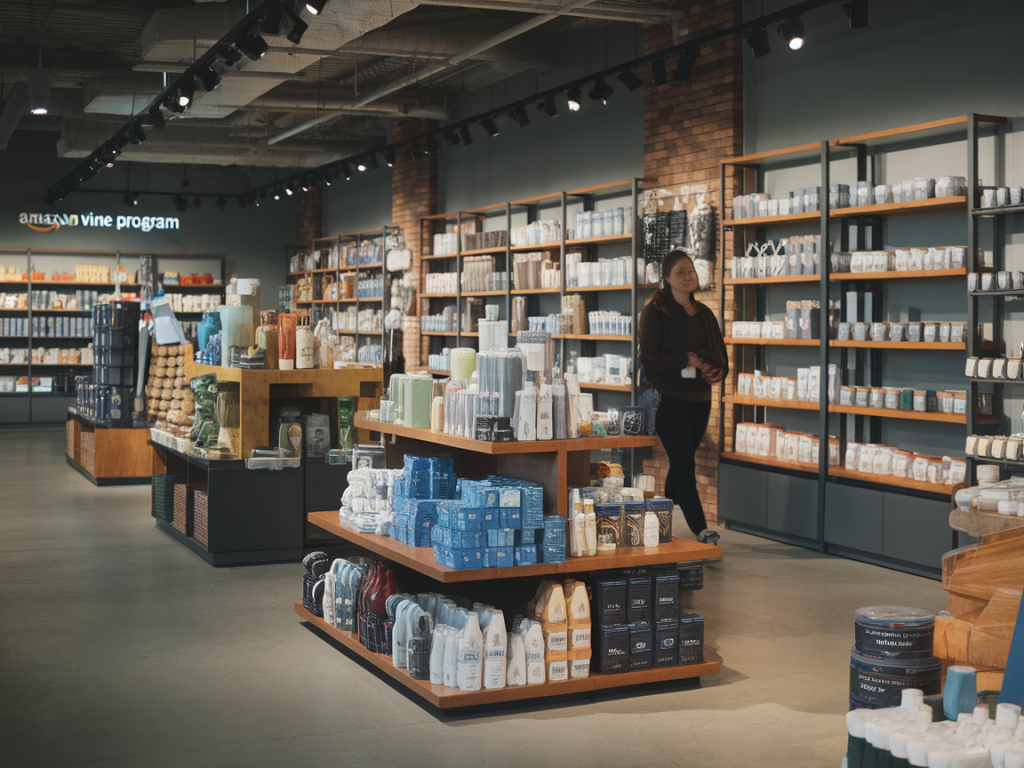
As a marketer who’s helped numerous brands scale on marketplaces, I constantly get asked: Can Amazon’s Vine program really lift product discoverability without eating into margins? The short answer is yes — but only if you approach it strategically. In this piece I’ll walk you through how growing retailers can use Vine to increase visibility, accelerate organic ranking, and generate trustworthy social proof while protecting margins and long-term profitability.
What Vine actually does — and what it doesn’t
Amazon Vine is an invite-only review program where selected reviewers (Vine Voices) receive products for free in exchange for an honest review. Vine reviews tend to be more detailed and considered than typical buyer reviews, and Amazon marks them clearly as Vine Customer Review. That visibility and perceived objectivity can kick-start discoverability for new or low-traffic SKUs.
But Vine is not a silver bullet. It won’t immediately create conversions if the listing is weak, the product-market fit is poor, or pricing is out of line. Vine is a tool to amplify an already solid foundation.
How Vine helps discoverability without direct discounting
There are three main mechanisms through which Vine improves discoverability without forcing you to sacrifice margins via sale pricing:
Improved conversion rates — High-quality reviews answer objections and reduce friction. That increases conversion rate (CR), which in turn signals Amazon’s algorithm to rank the product higher in search.Faster review accumulation — Rather than waiting months for organic reviews, Vine helps you gather reputable reviews quickly. A bigger review base lets you test price points without relying solely on promotions.Better organic visibility — Amazon’s A9/A10 algorithm uses conversion and engagement signals. More and better reviews increase click-through and conversion, which helps your ranking even after Vine participation ends.When Vine makes sense for growing retailers
Use Vine when you meet these conditions:
Your listing is optimized — high-quality images, strong bullets, clear descriptions, and keywords are in place.You have reliable supply and fulfillment (FBA or excellent FBM), so customer experience isn’t compromised.Customer acquisition via ads is working but expensive; you need a way to reduce cost-per-acquisition (CPA) over time.The product has a clear differentiator and target audience — niche, innovative, or solves a real customer pain.If you’re launching a fast-moving commodity with razor-thin margins and little differentiation, Vine is less likely to produce ROI.
Step-by-step playbook to use Vine efficiently
Here’s how I would run a Vine campaign for a growing retailer who wants discovery without margin erosion:
Audit and optimize first — Spend time on listing elements: keywords, A+ content, lifestyle images, comparison charts, and product videos where possible. Deploy a professional product description and strong feature-benefit bullets. Vine amplifies what’s already working.Set clear KPIs — Target review count, average rating threshold (e.g., 4.0+), conversion lift percent, and ROAS improvement over 90 days. Don’t run Vine as a one-off hope; tie it to measurable goals.Select the right SKUs — Prioritize products with reasonable COGS that can withstand the one-time cost of sampling or lost margin from giving units to reviewers. Focus on hero SKUs that will drive brand reputation.Use Vine in combination with targeted ads — Run sponsored display and sponsored product ads concurrently to increase impressions and drive early traffic. The combination of paid traffic plus credible reviews accelerates the algorithmic lift.Leverage post-Vine follow-up — Incorporate Vine reviews into your Q&A, A+ content, and marketing assets. Use quotes in ads and on product pages (respecting Amazon policy) to compound trust.Cost and margin considerations
Cost on Vine is not a per-review fee — Amazon charges a program fee and you supply the units. For many sellers this looks like:
| Expense | What to expect |
| Product cost | COGS of units provided to Vine reviewers (varies by SKU) |
| Amazon Vine fee | Program fee charged by Amazon (flat or per-item depending on account type) |
| Ad spend (optional) | Incremental ad budget to drive traffic during and after Vine run |
To avoid margin cannibalization:
Choose products with healthy gross margin so unit costs for sampling are an investment, not a loss leader.Limit Vine to a subset of SKUs (flagship or margin-resilient items) and avoid enrolling already best-selling cheap items.Track post-Vine conversion lift and incremental lifetime value (LTV) — if LTV increases, the sampling cost looks like customer acquisition spend rather than margin loss.Mitigating risks and staying policy-compliant
Amazon’s policies matter. Vine explicitly requires that reviews be honest; you can’t coerce positive reviews. To protect your brand and avoid suspensions:
Never incentivize Vine reviewers outside the program or ask for positive reviews.Monitor review sentiment. If multiple negative Vine reviews surface, investigate quality control rather than deleting reviews (which is policy-violative).Limit units per variant so you don’t introduce a flood of opinions that skew perception. A steady, controlled stream of Vine reviews is better than an inconsistent burst.Measuring success — the metrics I watch
After running Vine, these metrics tell whether it was worth the investment:
Conversion Rate (CR) uplift: immediate signal of listing improvement.Organic traffic and ranking: search position and sessions growth.Average star rating and review quality: helps with long-term trust.ACoS/ROAS on sponsored ads post-Vine: improved efficiency indicates sustainable discovery.Customer retention and repeat purchase rate: if Vine drives higher LTV, the program paid off.Alternative or complementary strategies
If Vine isn’t the right fit, consider these lower-cost tactics that can still boost discoverability:
Amazon Early Reviewer Program alternatives (where available) or third-party review channels integrated with post-purchase automation.Micro-influencer seeding off Amazon for niche audiences, directing traffic to your listing without heavy discounting.Bundles and value-added offers (e.g., complimentary accessories) that raise perceived value while maintaining margin.Using Amazon Vine smartly is less about handing out free products and more about investing in credible social proof to reduce CPA and increase organic rank. When approached like a conversion-optimization and customer-acquisition investment — with clear KPIs, selective SKU choice, and strict quality control — Vine can be a high-leverage move for growing retailers who want discoverability without sacrificing margins.