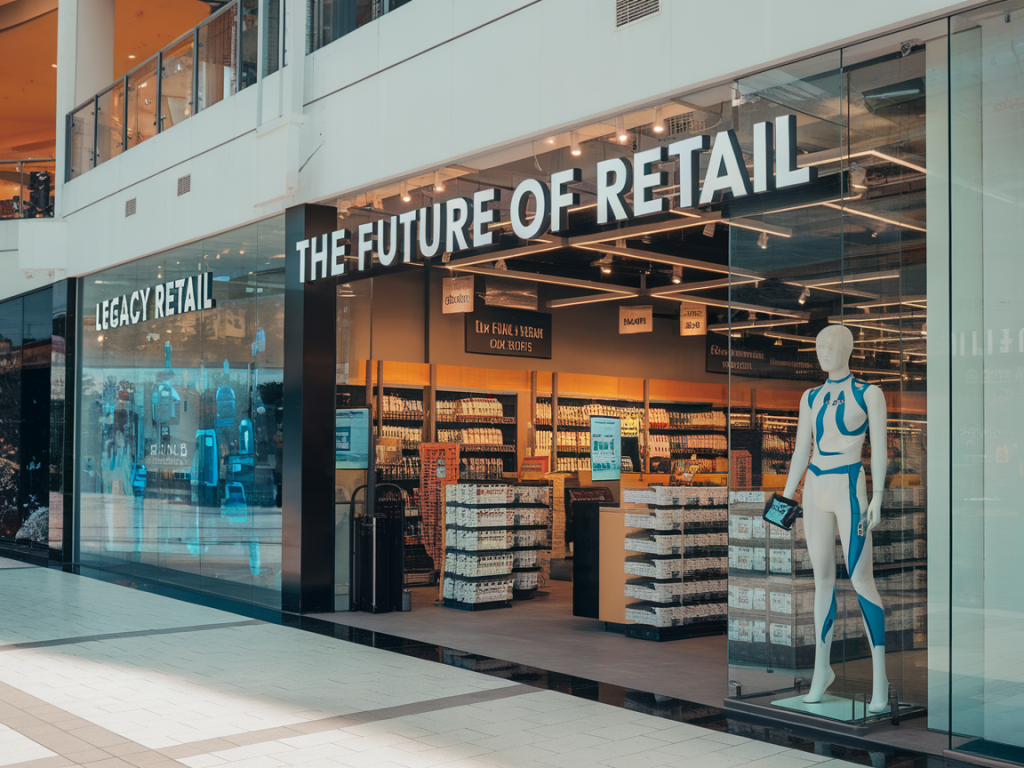
I’ve watched subscription models quietly—and then not so quietly—reshape entire retail categories. What started as a way to simplify reorders for niche products is now a full-blown competitive advantage that legacy retailers struggle to replicate. In this piece I want to walk you through why subscriptions win, what legacy retailers are getting wrong, and the exact pricing experiments you can run to stop customers from slipping away.
Why subscriptions beat legacy retail (from my point of view)
Subscriptions are more than recurring revenue. They change the customer relationship. When a customer signs up, you’re not asking them to make a purchase; you’re asking them to enter a relationship. That shift transforms three fundamental dynamics:
Legacy retailers often cling to transaction economics—price per unit, margin per sale—while subscription models optimize across time. That difference in horizon is why so many traditional stores lose momentum.
Common mistakes legacy retailers make
From my conversations with retail leaders, I see repeated errors:
The pricing tests that actually win back customers
If you run only one experiment, make it around pricing framing. Here are the pragmatic, specific tests I’ve used or advised on that move the needle.
1. Anchor + Decoy test
Hypothesis: Presenting a high-priced anchor increases conversion to the mid-tier plan.
How to run it:
Metric: Conversion rate to Standard and Premium, average revenue per user (ARPU), and churn after 3 months.
Why it works: The decoy funnels customers to the middle choice (the “Goldilocks” effect) and increases ARPU without large price increases.
2. Trial length vs. commitment test
Hypothesis: Longer free or low-cost trials increase conversion but may increase short-term cost; a short paid trial attracts higher-quality subscribers.
How to run it:
Metric: Trial-to-paid conversion, churn after 1 and 3 months, and cost per converted subscriber.
What I’ve seen: A small paid commitment (even £1) screens for intent and often increases retention compared to an entirely free trial.
3. Frequency discount test
Hypothesis: Committing to less frequent shipments at a small discount reduces churn for certain categories (e.g., home goods, pet supplies).
How to run it:
Metric: Retention per shipment, ARPU, inventory turnover.
Insight: Flexing delivery cadence improves perceived control and reduces cancelation from “too frequent” delivery fatigue.
4. Bundling and add-on anchoring
Hypothesis: Bundling core items with exclusive extras increases perceived value and stickiness.
How to run it:
Metric: Bundle uptake, churn, partner referral revenue.
Brands like Dollar Shave Club and HelloFresh grew rapidly by adding curated extras—not always cheaper, but more convenient.
5. Win-back pricing experiments
Hypothesis: Targeted, time-limited offers reactivating churned subscribers are more cost-effective than broad discounts.
How to run it:
Metric: Reactivation rate, cost to reacquire, long-term retention post-reactivation.
Personalization matters—generic discounts convert poorly compared to offers that address the churn reason.
6. Price localization test
Hypothesis: Localizing prices (not just converting currency) to match local willingness-to-pay increases market share abroad.
How to run it:
Metric: Conversion across regions, churn by locale.
Localization isn’t only about exchange rates; it’s about perceived fairness in each market.
What to measure and how to interpret results
The right KPIs for subscription pricing tests differ from transactional tests:
Run tests long enough to capture at least one meaningful churn window (I usually recommend 90 days minimum). Use cohort analysis to separate acquisition cohorts from pricing cohorts.
Operational levers that support pricing
Pricing tests fail when operations can’t deliver on expectations. Make sure you have:
Real-world examples that resonate
Look at how Nike’s membership programs shift the value proposition from product to experience, or how Peloton bundles hardware, content, and community into a single recurring spend. Even established grocery players like Tesco and Kroger now test memberships that mix discounts, delivery perks, and personalized offers. Each of these models succeeds because they create recurring perceived value, not just recurring transactions.
If you’re a legacy retailer, start small: pick one test, instrument it properly, and measure LTV, not just conversion. Subscriptions aren’t a silver bullet, but the right pricing experiments aligned with operational capability will change how customers see you—from a one-time vendor to an essential, ongoing partner.